
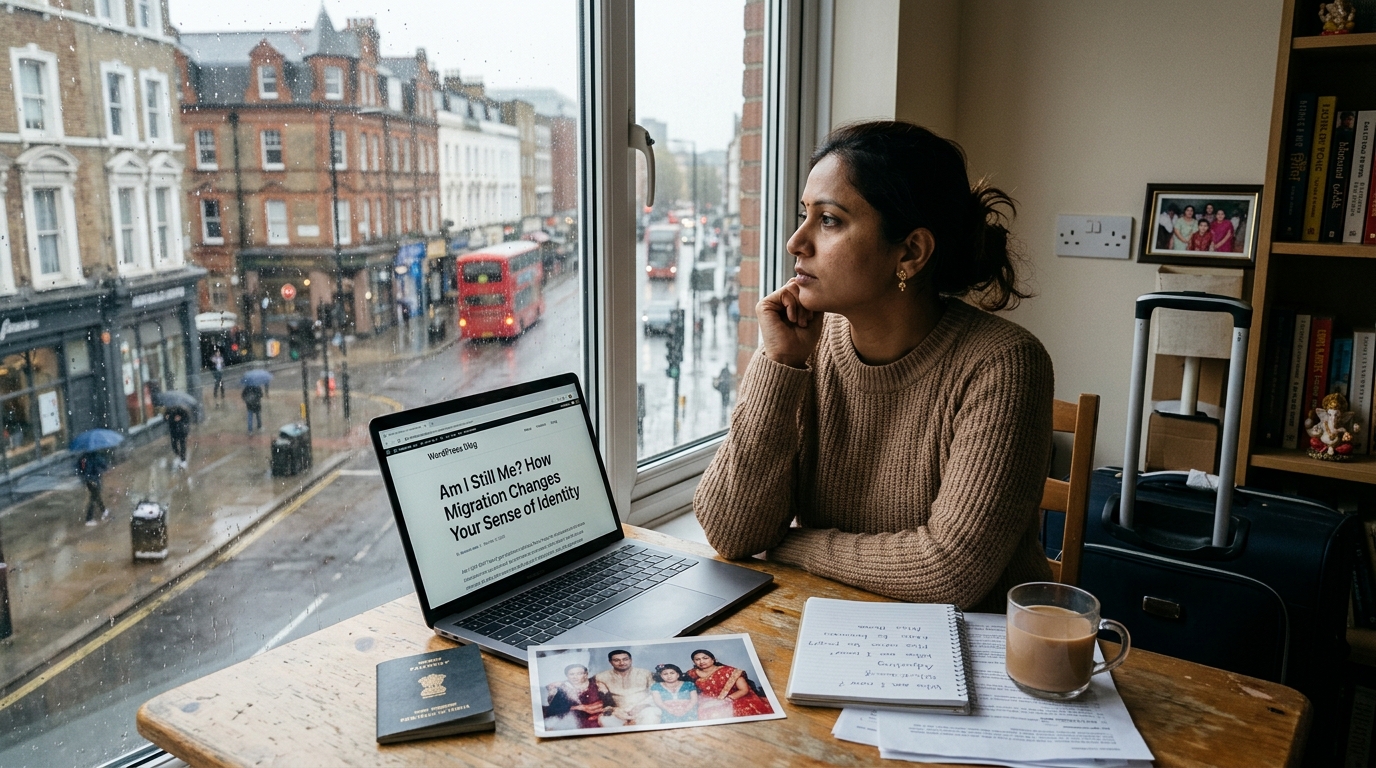
Picture this: you have finally arrived. The flight has landed, the customs officer has stamped your passport, and you are standing in a country you once only dreamed about. You should feel like yourself, except you don’t. Somewhere between the familiar streets you left behind and this unfamiliar city ahead, something subtle has shifted. You just can’t name it yet.
That quiet disorientation, that moment of wondering who you are now, is one of the most common yet least talked-about realities of migration. We celebrate the visa approvals, the new jobs, and the airport photos. But rarely do we sit with the deeper question that follows every migrant: Am I still me?
Identity Is More Fragile Than We Think
Before you move, your identity feels solid. You know your role in your family, your place in your community, the language your jokes land best in, the food that tastes like home. Identity isn’t just who you are, it’s the entire ecosystem that reflects you back to yourself every day.
Migration removes that ecosystem almost overnight. Suddenly, people mispronounce your name. Your qualifications don’t automatically translate. The humor that made you the life of every gathering gets lost in translation. You are the same person, carrying the same history and values, but the world around you is no longer a mirror, it’s a blank wall.
“You are the same person — but the world around you is no longer a mirror.”
This is not a weakness. This is what happens when a deeply human need, the need to belong is suddenly unsatisfied. And for many migrants, the loss of that belonging is a grief they never expected to feel.
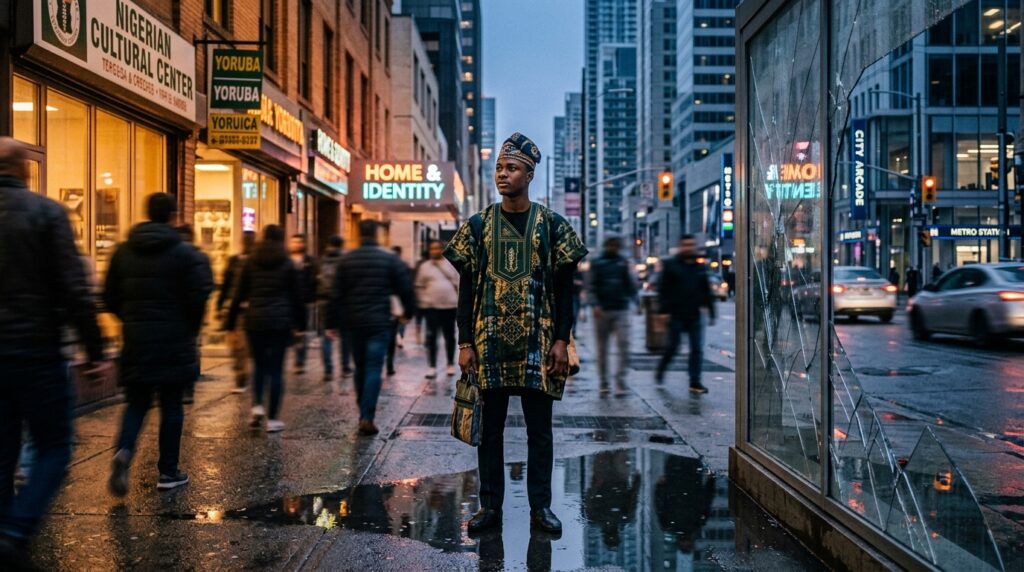
Caught Between Two Worlds
One of the strangest parts of migration is that you don’t just gain a new world, you find yourself suspended between two. You are no longer fully at home in the country you left, because you have changed. But you are not yet fully at home in the country you arrived in, because you are still arriving.
This in-between space can feel lonely in a way that is hard to explain to people who haven’t lived it. You video call your family back home and laugh together, but hang up and feel the distance like a physical ache. You make friends in your new city and enjoy genuine moments, but still feel like a guest at someone else’s table.
For parents especially, this tension becomes even more layered. Children adapt faster, they pick up accents, make friends, and begin to belong in ways that feel both wonderful and quietly heartbreaking to watch. A mother I once heard described it perfectly: “My daughter is becoming someone I am so proud of, and someone I sometimes don’t fully recognise.”
“Migration doesn’t erase you. It expands you — sometimes painfully.”
The Resilience Nobody Photographs
What social media rarely captures is the quiet, unglamorous work of rebuilding yourself. It happens in small moments, the first time you successfully navigate a foreign bureaucracy, the first local friend who truly gets you, the first time you feel genuinely at ease rather than just managing.
Migrants do this work every single day. They learn new systems while grieving old ones. They hold their culture close, in their cooking, their prayers, their mother tongue spoken at home, while also reaching forward into something new. This is not confusion. This is extraordinary human flexibility.
The truth is, identity was never meant to be fixed. It grows, bends, and deepens with every experience. Migration simply accelerates that process in ways that can feel overwhelming before they feel enriching.
So — Are You Still You?
Yes. But you are also becoming someone more.
The version of you that boards a plane and lands in an unfamiliar world, that rebuilds a life with courage and quiet determination, that carries a whole culture in their chest while learning a new one, that person is not less than who you were. They are a deeper, harder-won version of the same soul.
Migration changes your sense of identity, yes. But it does not steal it. If anything, it forces you to discover what was truly yours all along, the parts of you that no new country, no language barrier, and no amount of distance can take away.
You are still you. You are just more of yourself than you have ever been.