
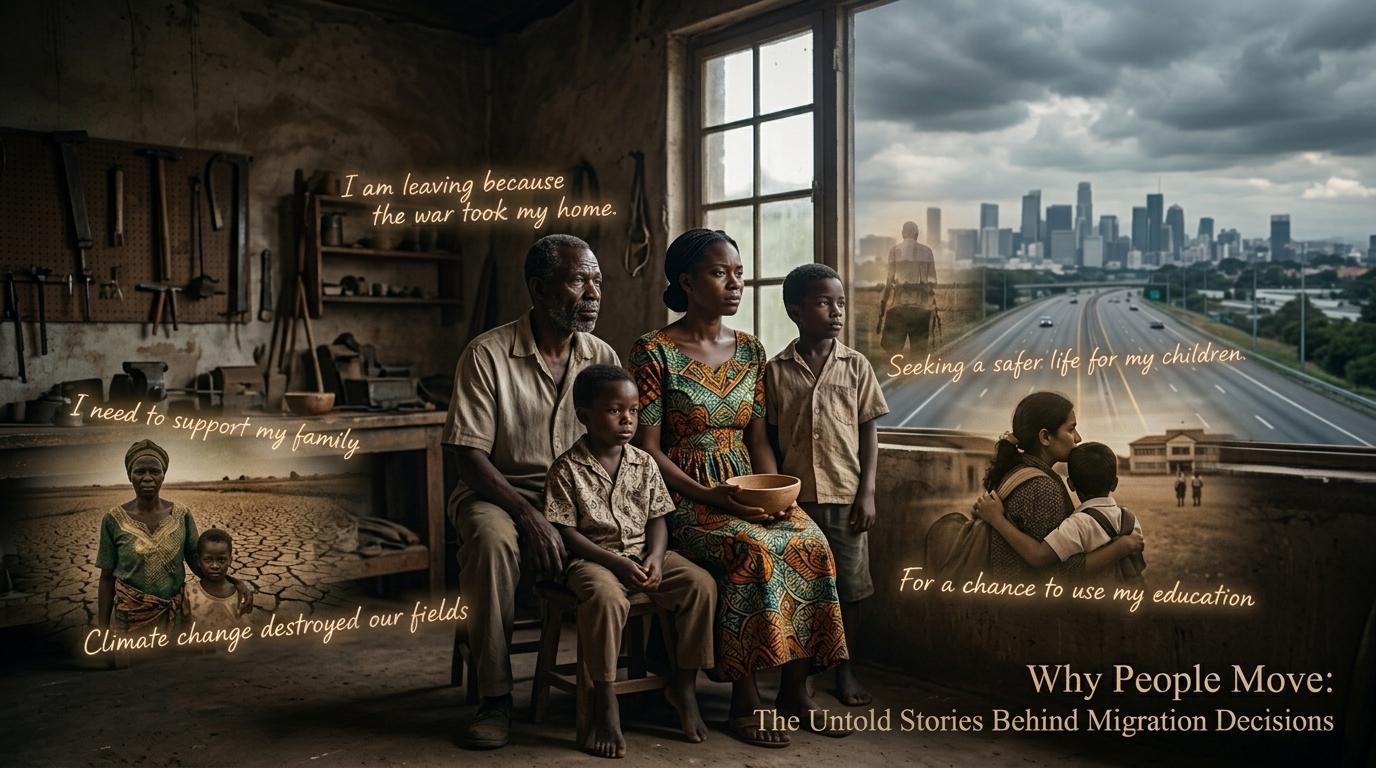
Migration or Japa stories are often told through policies, statistics, and border debates, but behind every migration story is a deeply human experience, sometimes told through rose tinted lenses that glamourize but reduce the true essence of the experience. People rarely wake up one morning and casually decide to leave behind familiar streets, loved ones, careers, cultures, and memories. The decision to migrate is usually layered with emotions, sacrifice, hope, fear, and the desire for something better.
As a married woman, a graduate, and a mother, I have come to understand that migration decisions are not always driven by financial dreams alone, they are often rooted in survival, purpose, responsibility, and dreams for the future and in the rare scenario, just form the adventure of it all.
For many families in Nigeria, migration begins long before the actual journey. It starts in conversations held late at night between spouses discussing finances, opportunities, children’s futures, and the realities of daily living. It begins with silent worries about limited access to quality education and healthcare, insecurity, unemployment, lack of opportunities, lack of an enabling environment for small businesses to thrive, political instability, corruption and unstable systems. Sometimes, migration is not about abandoning one’s country; it is about searching for an environment where one’s family can thrive.
There are what experts call “push factors” and “pull factors” in migration. Push factors are the conditions that drive people away from their current environment and these include all the issues listed above. For many graduates, it can be frustrating to spend years studying, only to face limited career growth, underemployment or worse still, unemployment afterward. In such situations, migration becomes more than a choice; it becomes a strategy for survival and advancement.
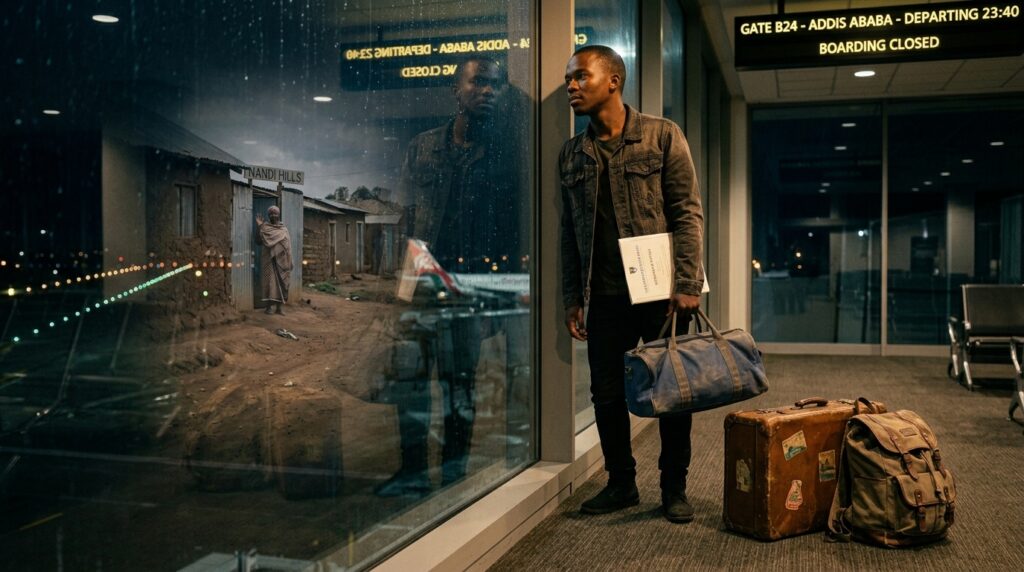
As a woman and a mother, one of the strongest push factors is often concern for children’s future. Parents naturally want access to better schools, safer communities, functional healthcare, and environments where their children can dream and thrive without constant limitations. Many mothers quietly carry the emotional burden of wanting more stability for their children while also grieving the possibility of leaving behind extended family, traditions, and familiar support systems.
On the other hand, pull factors are the attractions that draw people toward a new country or community. These include better educational opportunities, career advancement, improved living standards, security, social welfare systems, and the possibility of a more balanced quality of life. In actual fact, just the opposite of all things that would push you away from your primary location! Sometimes, the pull factor is simply hope, the belief that hard work may finally produce visible results in a more enabling environment.
However, what is often left untold are the emotional realities behind migration decisions. Social media frequently portrays migration as glamorous: airport pictures, beautiful city skylines, new jobs, and exciting lifestyles. Yet behind those images are difficult choices, uncertainty, homesickness, financial strain, and emotional adjustments. Many migrants leave behind aging parents, siblings, lifelong friendships, careers, and cultural familiarity. The emotional cost of starting over in a foreign land can be enormous.
For women especially, migration can come with unique challenges. Married women migrating with families often carry multiple responsibilities at once — supporting their spouse emotionally, helping children adjust to new schools and cultures, and rebuilding their own careers or identities in unfamiliar systems. Some highly educated women discover that their qualifications may not immediately transfer abroad, forcing them to restart professionally or take temporary roles beneath their capabilities. These sacrifices are rarely visible, yet they form part of many migration stories.
There is also the identity struggle that accompanies migration. People often find themselves caught between two worlds trying to preserve their culture and values while adapting to a new society. Children may integrate faster into the new culture, while parents struggle to maintain traditions, language, and family identity. Many migrants silently wrestle with questions like: “Where do I truly belong now?” or “Will my children still understand where they come from?” Despite these challenges, migration also reveals remarkable resilience. Migrants step into uncertainty with determination and faith. They rebuild networks, learn new systems, adapt to different cultures, and continue striving despite obstacles. Many do this not only for themselves but for future generations.

One untold truth about migration is that it is deeply personal. Two people may move to the same country for completely different reasons. One may migrate for education, another for safety, another for career growth, and another simply to give their children a better chance at life. Migration stories cannot be reduced to stereotypes or assumptions because every journey carries unique emotional, financial, and social realities.
In today’s world, migration continues to shape families, economies, and societies globally. Yet beyond the headlines and political conversations are ordinary people making extraordinary sacrifices in pursuit of dignity, opportunity, and hope. Understanding migration requires empathy, the ability to see beyond passports and policies into the hearts of people navigating major life transitions.
Conclusion
At its core, migration is not only about movement from one country to another. It is about dreams, courage, survival, identity, and the universal desire for a better future. The untold stories behind migration decisions remind us that every migrant carries more than luggage; they carry memories, responsibilities, fears, and hopes for generations to come.