
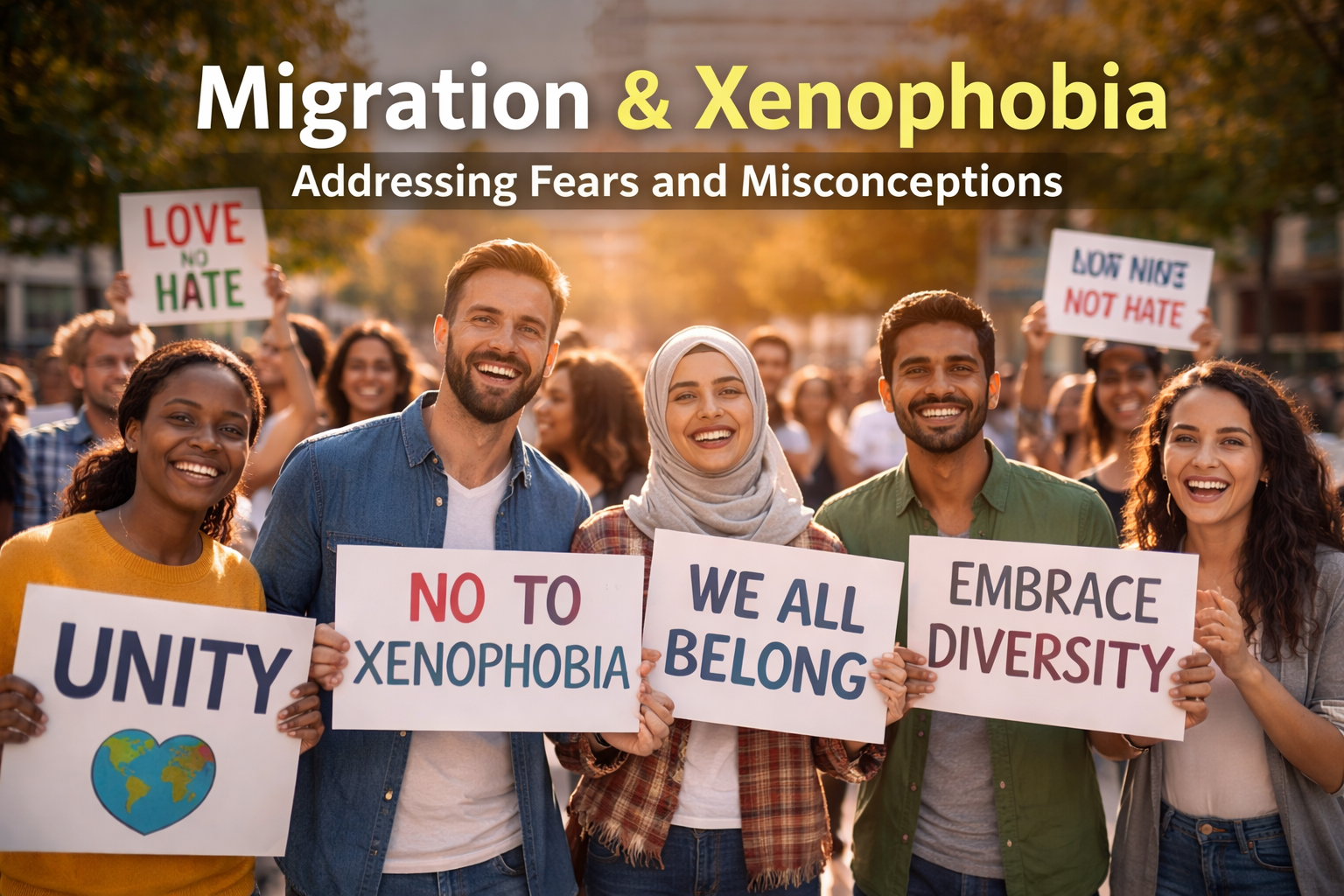
Introduction
Migration has always been part of human history. People move across borders for many reasons, including education, employment opportunities, safety, or the hope of building a better future. While migration creates opportunities for both migrants and host societies, it is often surrounded by fear, misunderstanding, and misinformation.
One common reaction to these fears is xenophobia, which refers to prejudice or hostility toward people perceived as foreigners. Xenophobia can divide communities and make it difficult for migrants to integrate and contribute fully to society.
However, many concerns about migration are based on misconceptions rather than facts. Understanding migration and addressing these misunderstandings is essential for building inclusive communities where diversity is respected and valued.
What is Xenophobia?
Xenophobia is the fear, dislike, or prejudice directed toward people from other countries or cultural backgrounds. It can take different forms, including workplace discrimination, social exclusion, harmful stereotypes, and in extreme cases, violence.
These attitudes often develop when people lack accurate information about migrants or have limited interaction with individuals from other cultures. Economic uncertainty, political narratives, and media portrayals can also shape negative perceptions.
Recognizing xenophobia and understanding its causes is an important step toward creating communities that promote tolerance, respect, and cooperation.
Why Do Fears About Migration Exist?
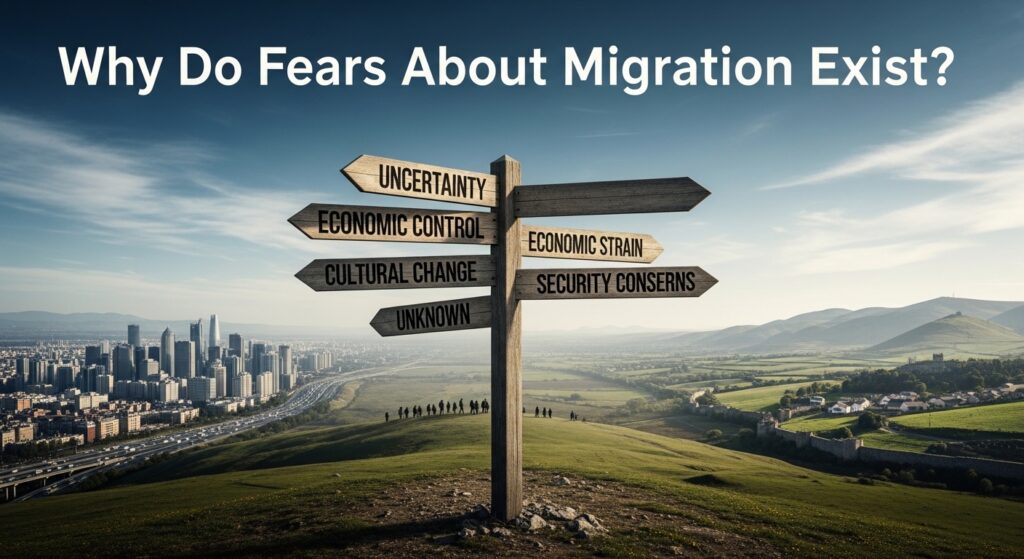
Concerns about migration usually arise from several common fears and misunderstandings.
Economic Competition
A common concern is that migrants may compete with local citizens for jobs or economic opportunities. Some people fear that migration could reduce employment prospects or lower wages.
In reality, migrants often contribute positively to economies by filling labour shortages, supporting industries that need workers, and establishing businesses that create additional jobs.
Cultural Differences
Cultural differences can also create uncertainty. When people encounter unfamiliar languages, customs, or traditions, they may worry that their cultural identity or social norms are being challenged.
However, cultural diversity often enriches societies by introducing new ideas, cuisines, music, art, and perspectives that strengthen communities.
Religious Differences
Religious diversity can also become a source of concern in some societies. When migrants bring different religious practices or expressions of faith, some members of the host community may feel uncertain about how these differences will fit within existing social structures.
In many cases, these concerns are based on misunderstanding rather than real conflict. Across many societies, people of different religious backgrounds live peacefully and contribute positively to their communities. Encouraging interfaith dialogue, respect, and education about religious diversity can help reduce these fears.
Security Concerns
Security concerns may also arise when migration is wrongly linked to crime or social instability. Media narratives or political discussions can sometimes amplify these fears.
However, research in many societies shows that migrants are generally no more likely to commit crimes than native-born citizens. Providing accurate information is important in addressing these misconceptions.
The Positive Contributions of Migrants
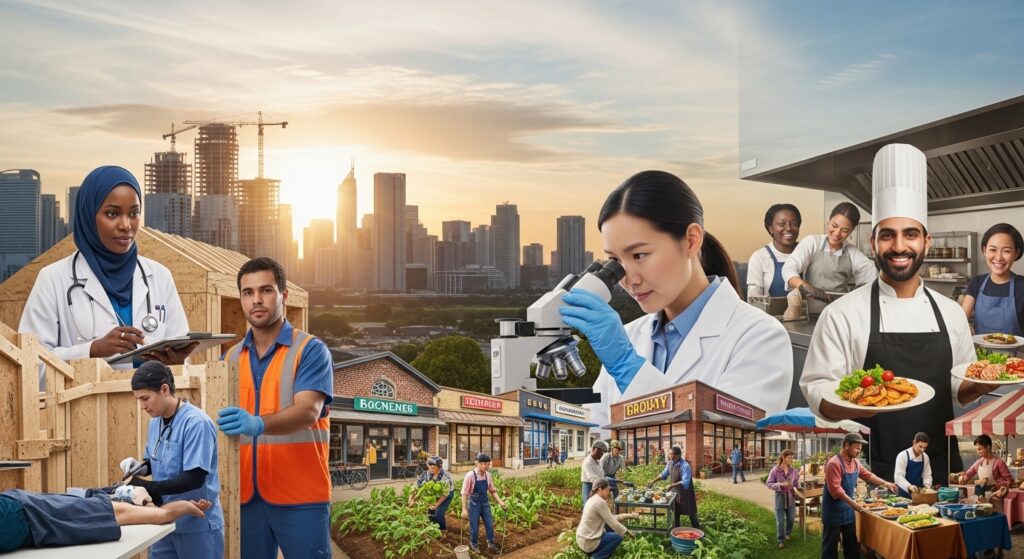
Migrants contribute significantly to the societies they join in several ways.
Economically, migrants support industries by filling labour shortages and starting businesses that stimulate economic growth. Many successful companies around the world have been founded by migrants or their descendants.
Socially, migrants participate in communities through education, professional work, and volunteering. Their diverse experiences and perspectives often promote creativity and innovation.
Culturally, migrants introduce new traditions, languages, cuisines, and artistic expressions that make societies more vibrant and dynamic. When migrants are successfully integrated, both migrants and host communities benefit from these contributions.
Promoting Understanding and Inclusion
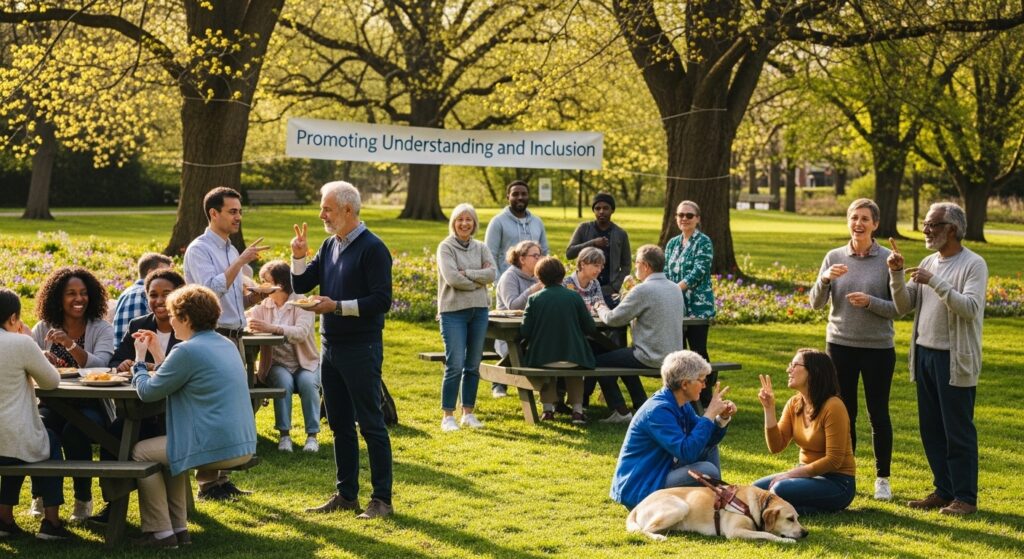
Reducing xenophobia requires joint efforts from governments, institutions, and communities.
The Role of Government
Governments play an essential role in addressing xenophobia and protecting migrants. They must establish and enforce laws that prohibit discrimination and xenophobic violence.
When governments clearly condemn xenophobic attacks and ensure that offenders are held accountable, it sends a strong message that discrimination will not be tolerated.
Governments can also promote social cohesion by supporting education programs and public awareness campaigns that encourage cultural understanding and challenge misinformation about migrants. Providing migrants with safe environments, access to services, and opportunities for integration also helps strengthen trust and stability within society.
Community Engagement
Beyond government action, community interaction is equally important. When migrants and local residents interact through workplaces, schools, and community events, stereotypes often diminish and relationships develop.
Education, open dialogue, and cultural exchange programs can help communities better understand one another and appreciate the benefits of diversity.
Conclusion
Migration is a natural and ongoing part of global development. Although fears and misconceptions about migrants exist, many of these concerns are based on misunderstanding rather than reality.
By promoting accurate information, encouraging dialogue, and implementing inclusive policies, societies can reduce xenophobia and build stronger communities.
Ultimately, migration is not only about movement across borders—it is about people, cultures, and opportunities coming together to create a more connected and diverse world.