

Moving abroad is one of the most exciting decisions you can make — but it is also one of the most paperwork-intensive. Whether you are relocating for work, study, retirement, or a fresh start, missing even one critical document can delay your visa, close your bank account, or land you in a legal grey zone in your new country.
This guide walks you through every document category you need — and why each one matters. Keep this checklist handy and tick them off before your departure date.
1. Identity & Travel Documents
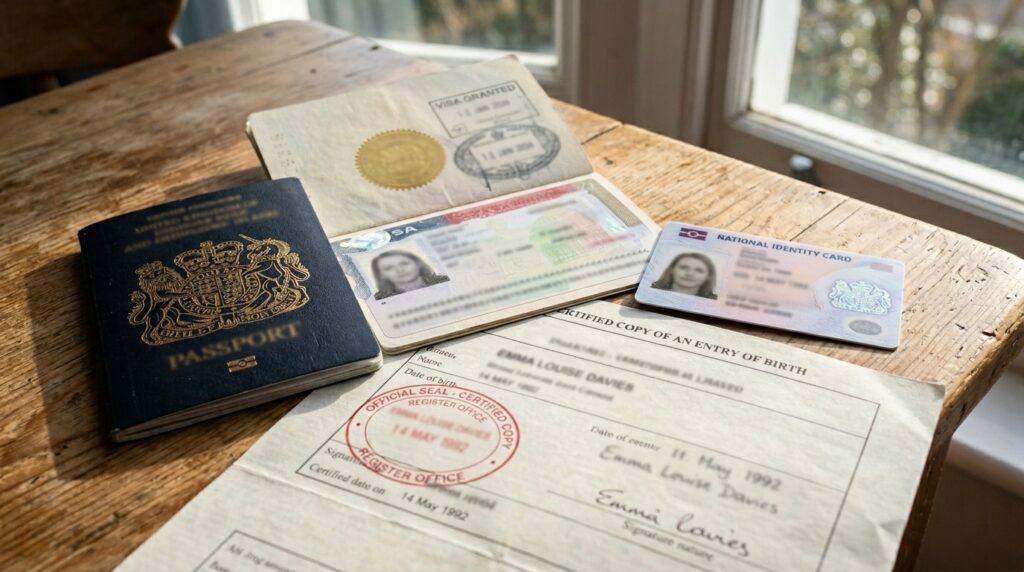
These are non-negotiable. Without them, you cannot legally enter, work, or reside in any foreign country.
- Valid Passport — Must have at least 6 months of validity beyond your intended stay. Many countries deny entry otherwise.
- Visa / Residence Permit — Research the exact visa type for your purpose, tourist, work, student, or long-stay. Apply well in advance.
- National ID Card — Some countries accept this in lieu of a passport for travel within certain regions (e.g., the EU Schengen Area).
- Birth Certificate (Certified Copy) — Often required for school enrollment, marriage registration, or citizenship applications abroad.
2. Legal & Financial Documents
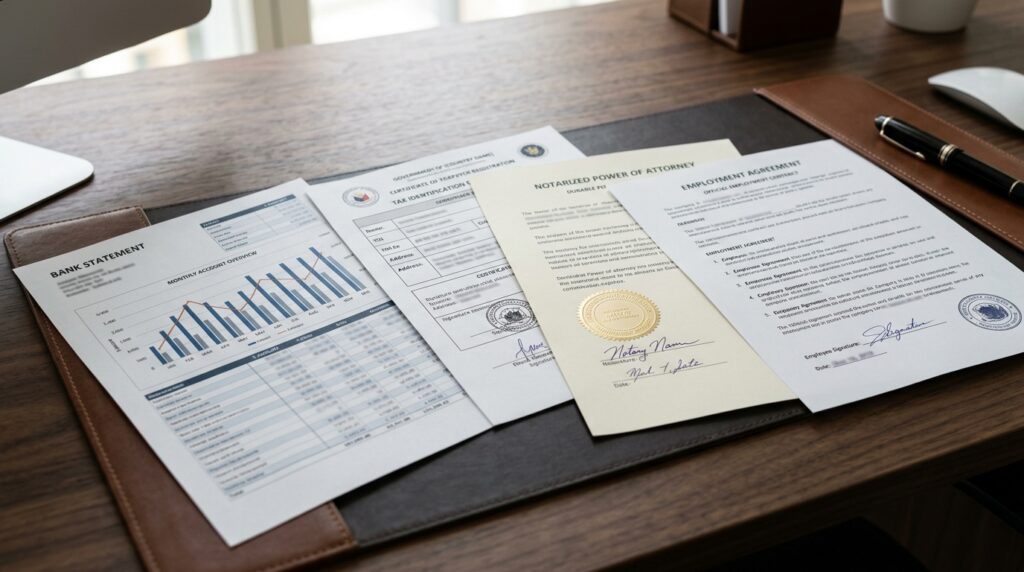
These documents protect your financial identity and legal standing in your new country.
- Bank Statements (3–6 months) — Proof of funds is commonly required for visa applications and opening a local bank account.
- Tax Identification Number (TIN) / ITIN — Keep documentation of your home country tax ID. Many countries will need this for financial registration.
- Power of Attorney (if applicable) — If someone will manage your affairs back home while you are abroad, have this notarised before you leave.
- Proof of Income / Employment Contract — Required for long-stay visas, property rental, and bank account opening abroad.
3. Health & Medical Documents
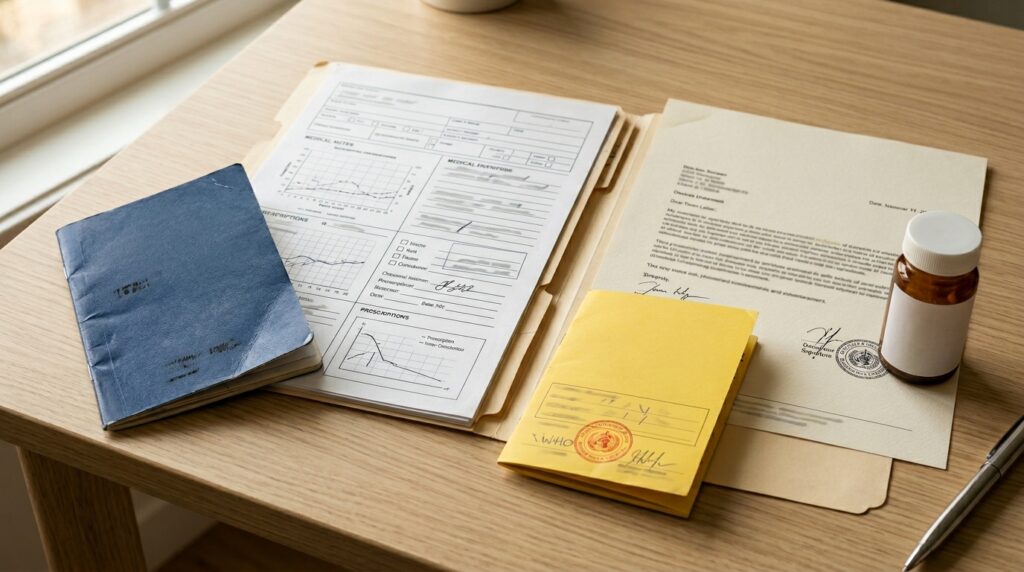
Healthcare systems vary enormously by country. These documents ensure continuity of care and legal compliance.
- International Health Insurance Policy — Many countries require proof of health coverage as a visa condition. Ensure it covers your destination country fully.
- Medical Records & Prescription History — Essential if you have chronic conditions or take regular medication. Have records translated if needed.
- Vaccination Certificate — Certain countries require proof of specific vaccinations (e.g., yellow fever, COVID-19) at the port of entry.
- Medication Documentation — Carry a doctor’s letter for all prescribed drugs, especially controlled substances, to avoid confiscation at customs.
4. Education & Professional Documents
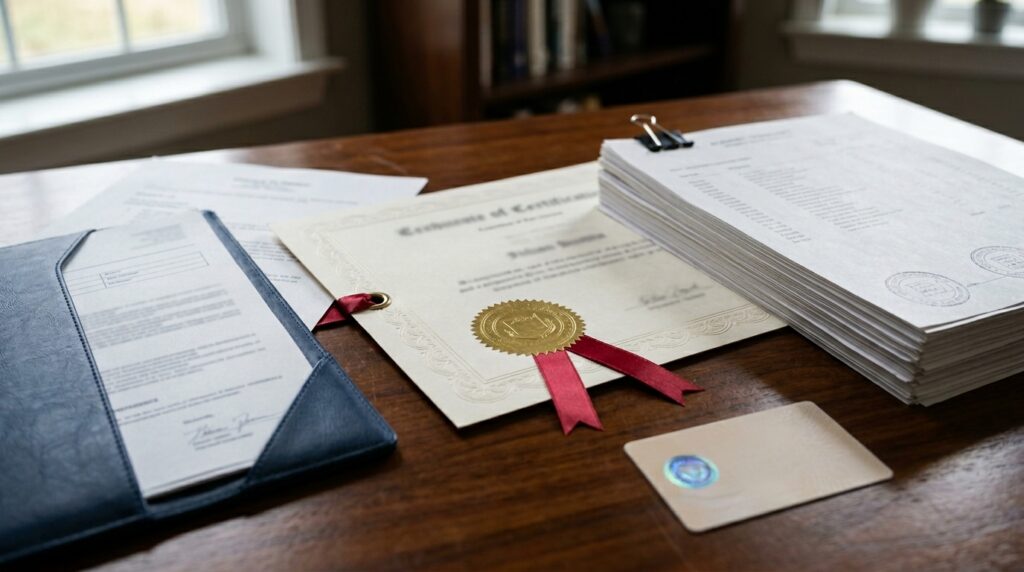
If you are moving for work or further education, these credentials will be scrutinized closely.
- Degree Certificates & Transcripts — May need to be apostilled or officially translated for recognition in your destination country.
- Professional Licences & Certifications — Doctors, lawyers, engineers, and teachers often need their qualifications re-evaluated or re-registered abroad.
- Reference / Recommendation Letters — Useful for job applications and some visa categories that assess professional standing.
- CV / Résumé (localised version) — Adapt your CV to the format expected in your destination country — formats differ significantly worldwide.
5. Family & Relationship Documents
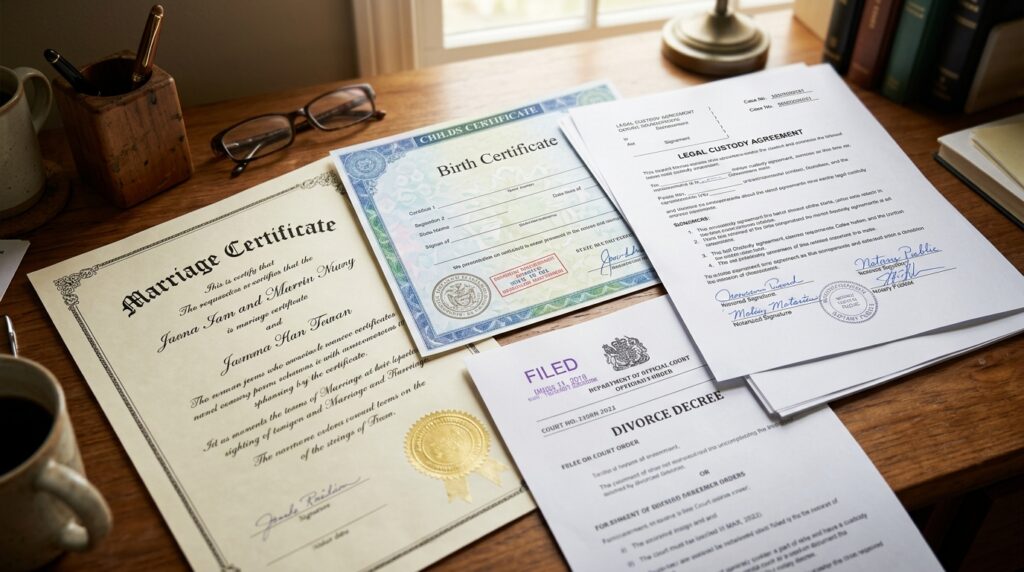
If you are moving with a spouse, partner, or children, these documents become part of your visa file.
- Marriage Certificate — Required for spousal visa applications and registering your relationship with local authorities.
- Children’s Birth Certificates — Needed for school enrolment, dependent visa applications, and custody documentation.
- Custody / Court Orders (if applicable) — Some countries require documentation showing you have legal permission to relocate children.
- Divorce Decree (if applicable) — Needed for some visa applications and to verify marital status officially.
Pro Tips Before You Pack Your Documents
- Make certified copies of every document and store them separately from originals.
- Scan everything and upload to a secure cloud folder (Google Drive, Dropbox) before departing.
- Check whether your documents need an Apostille stamp, required by Hague Convention member states.
- Hire a certified translator early, official translations can take 2–4 weeks.
Final Word
The paperwork side of moving abroad may seem overwhelming, but treating it as a checklist, one item at a time, makes it entirely manageable. Start gathering your documents at least 3–6 months before your planned move date. The earlier you begin, the fewer surprises you will face at the immigration desk.
A well-prepared mover is a confident mover. Good luck on your journey abroad!