
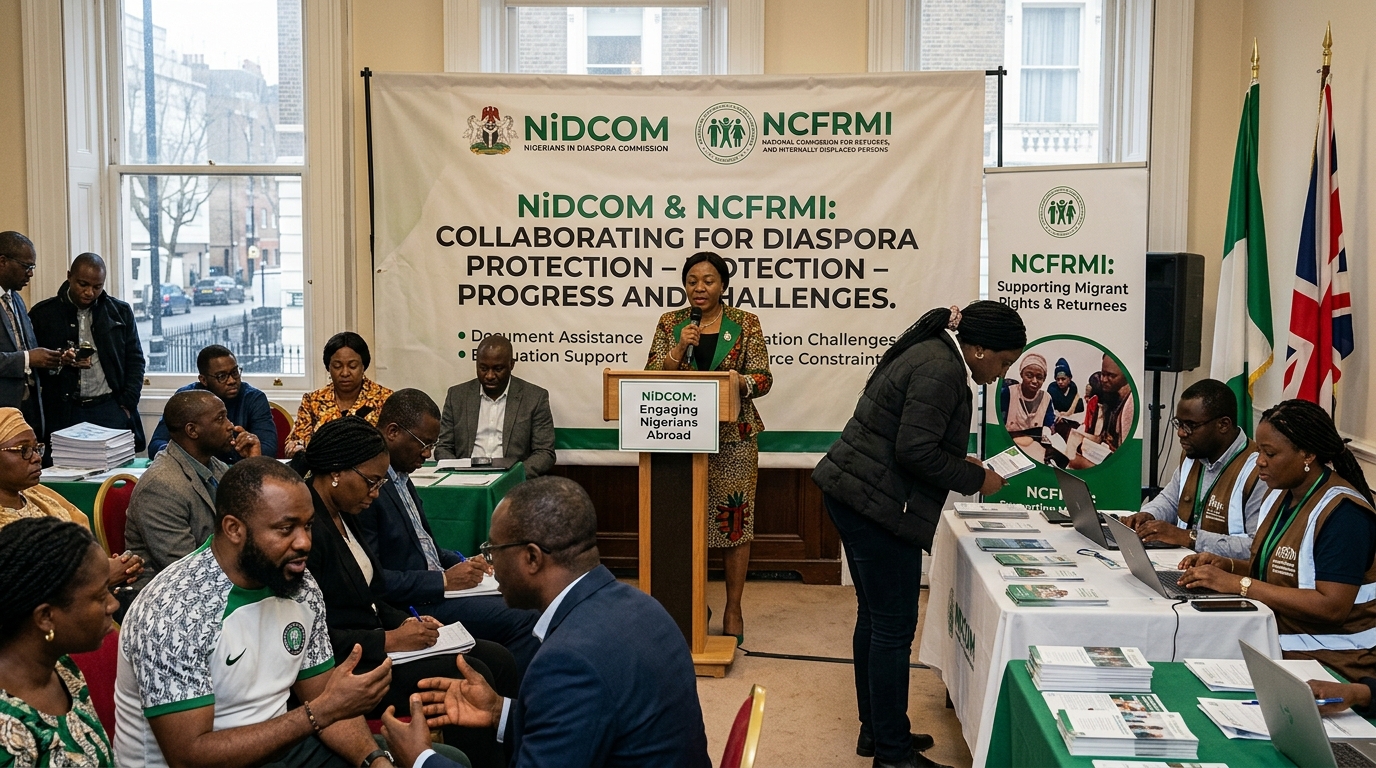
Nigeria has one of the largest diaspora populations in Africa, with millions of citizens living, studying, and working abroad. While migration creates opportunities for economic growth and global exposure, it also exposes Nigerians to risks such as exploitation, trafficking, discrimination, and legal vulnerabilities. To address these challenges, institutions such as the Nigerians in Diaspora Commission (NiDCOM) and the National Commission for Refugees, Migrants and Internally Displaced Persons (NCFRMI) play critical roles in protecting Nigerian citizens both abroad and at home.
These agencies serve as key pillars in Nigeria’s migration governance framework, providing support services, advocacy, and policy coordination. However, despite notable progress, they continue to face operational and structural challenges that affect their overall effectiveness.
Mandate and Responsibilities
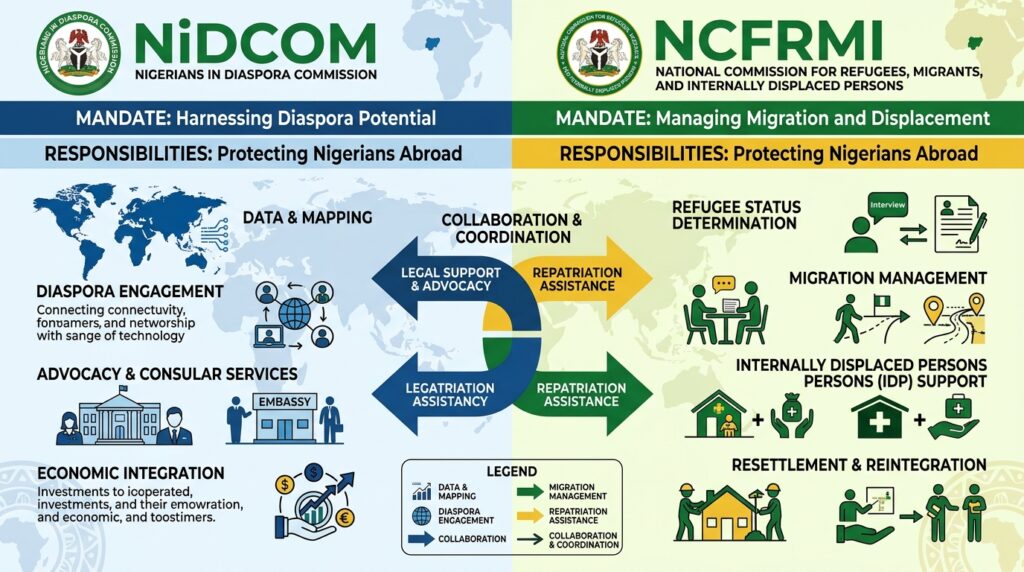
NiDCOM is responsible for engaging Nigerians in the diaspora, promoting their welfare, and leveraging their contributions for national development. The Commission addresses issues such as citizen protection, diaspora investment, and emergency response for Nigerians in distress abroad.
NCFRMI focuses on refugees, migrants, and internally displaced persons. It oversees humanitarian assistance, reintegration programs, and protection services for vulnerable populations affected by migration and displacement.
Progress and Achievements
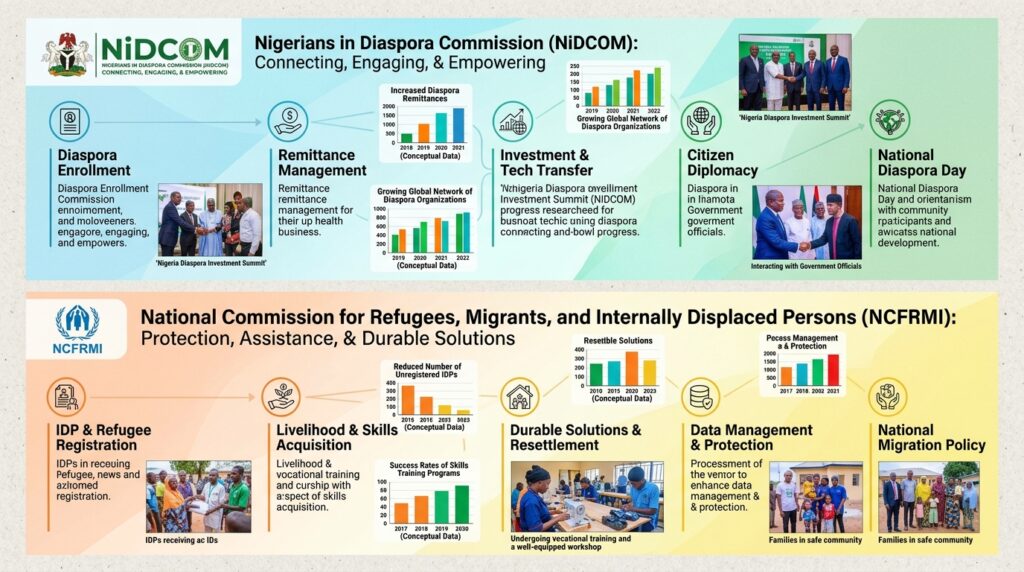
NiDCOM has made notable progress in responding to the needs of Nigerians abroad, including facilitating evacuations during crises, intervening in cases of trafficking, and strengthening diaspora engagement.
NCFRMI has supported the reintegration of returnees, particularly victims of irregular migration, through partnerships with international organizations and targeted support programs.
Key Challenges
Despite these efforts, both institutions face challenges such as limited funding, capacity constraints, and coordination gaps. Bureaucratic delays and limited public awareness also affect the reach and effectiveness of their services.
The increasing complexity of global migration issues, including irregular migration and transnational crime, further strains existing systems.
Strengthening Protection Mechanisms
Improving effectiveness requires increased funding, stronger institutional capacity, and better coordination among relevant agencies. Digital tools can enhance communication with Nigerians abroad and provide timely assistance.
Public awareness campaigns and stronger partnerships with host countries and international organizations are also essential to improve protection outcomes.
Conclusion
NiDCOM and NCFRMI remain central to Nigeria’s efforts to protect its citizens in a complex migration environment. While progress has been made, strengthening these institutions will ensure more effective support for Nigerians abroad and vulnerable populations at home.